Thursday, 29 April 2010
Monday, 19 April 2010
Evaluation of Finished Production
1) In what ways does your media product use, develop or challenge forms and conventions of real media products?
Our thriller uses forms a conventions of a real media product, Seven. Throughout the opening of seven not once is the full identity of the actor is revealed and we have duplicated that sense of mystery in our thriller. Also in seven, during the opening of seven, weird and grisly activity is taking place and we have also used an element of this in our thriller.

Here is an example of two screen grabs, one from the thriller Seven and one from our finished thriller. As you can see we have duplicated the idea of crossing out someone’s eyes from a picture, which we thought would add the sense of, who would do this? This type of activity would also leave the audience in suspense and make the person who did this appear like a menace to the audience.
2) How does your media product represent particular social groups?
I think our media product represents particular social groups as our thriller contains a degree of mystery, crime and abnormal behaviour which I’m sure can relate to one if not more social groups. A group which I think it relates to is teenagers as teenagers can pretty much duplicate this, teenagers can be mysterious at times as they often whisper things to one another which relates to the mystery theme. Teenage crimes are constantly rising and from my area, statistically the majority of crime is produced by teenagers which relates to the crime theme. The abnormal/random behaviour again relates to teenagers because teenagers can do very strange thing that can even baffle their parents which ties in with the thriller.
3) What kind of media institution might distribute your media product and why?
If there were any distributors out their willing to distribute our media product, it would most probably come from a London company, likely from a fund raiser because investors are unlikely to invest in something if it is very unlikely to make a profit. As we are an unknown and unsigned group, we have no big named actors, the chances of use reeling in a huge backing is minuscule. The reason why the small London company may back us is because, they may rather back a British film oppose to an American one and also have hope in us that we are the next filming generation.
4) Who would be the audience for your media product?
The audience for my media product would consist mainly of teenage males (14-18) because it is usually the case that males are generally more interested in thrillers rather than females but this isn’t to say that females don't watch thrillers, just the majority. We also found out in our survey results that this is the case; we used this website to obtain this information http://www.freeonlinesurvey.com/
5) How do you attract/address your audience?
We grabbed our audience’s attention by leaving them in suspense throughout, we didn’t give away too much however we gave them enough for them to want to watch on to the end of the film. The reason for us doing this is because at the end of the day no one wants to watch a film where they can guess the storyline from the opening as that would just spoil it for each person able to do this. A successful thriller should never give away the entire storyline, but give enough for the audience to figure out either at the time of watching or after a deep thought.
6) What have you learnt about technologies from the process of constructing this product?
From the process of constructing this product I have learnt that technologies are just as important during process of filming as well as the editing it has to go through for it to achieve its desired finish. For example if I had a top of the range camera to use to film my thriller and suddenly I am left with the most basic programs to edit my filming, it would pretty much put the top of the range camera to waste, however not always.
Digital camera:
I have never owned a video digital camera and therefore have never been an expert at operating one, however due to the use of video camera during the making of my thriller I have gained the basic skills of how to use it and how not to use it. I have also learned that a stand is very useful for taking specific shots such as a steady shot or angles shot.
Imovie Software:
This is the same case as the video camera, I myself do not have one and rarely use one for that matter and after editing my thriller on this piece of technology I have obtained the ability to edit filming, add transitions and text and music, move shots around to the desired order and just general basics there is to know about film editing.
Website: http://www.freeonlinesurvey.com/
I have also learned how to use this website, how to create my own survey and publish it onto my blog in order for me to collect essential data, which I used to me find my target audience. I found this website very useful as it was quick and easy to use, it required no sign up and I collected the data I needed within just minutes of people.
7) Looking back at your preliminary task, what do you feel you have learnt in the progression from it to the product?
Looking back at my preliminary task, I feel as if I have learned and taken in a significant amount of information and skill required to both analyze and to film a thriller opening and to be able to identify what actually makes a good thriller and what can ruin a thriller no matter how minimal the error as it can make or break a thriller opening. I have also learned why particular shots are used and the purpose of that shot, whether it be to emphasize a facial expression or to represent something, each and every shot has its purpose and is deliberately put their for a reason. I have also had a glimpse of the amount of editing that goes on behind the filming as filming is just a fraction of what goes on. Along with that, also taken in consideration is, settings, costumes, props, lighting, music, special effects, dialogue and many more.
Our thriller uses forms a conventions of a real media product, Seven. Throughout the opening of seven not once is the full identity of the actor is revealed and we have duplicated that sense of mystery in our thriller. Also in seven, during the opening of seven, weird and grisly activity is taking place and we have also used an element of this in our thriller.

Here is an example of two screen grabs, one from the thriller Seven and one from our finished thriller. As you can see we have duplicated the idea of crossing out someone’s eyes from a picture, which we thought would add the sense of, who would do this? This type of activity would also leave the audience in suspense and make the person who did this appear like a menace to the audience.
2) How does your media product represent particular social groups?
I think our media product represents particular social groups as our thriller contains a degree of mystery, crime and abnormal behaviour which I’m sure can relate to one if not more social groups. A group which I think it relates to is teenagers as teenagers can pretty much duplicate this, teenagers can be mysterious at times as they often whisper things to one another which relates to the mystery theme. Teenage crimes are constantly rising and from my area, statistically the majority of crime is produced by teenagers which relates to the crime theme. The abnormal/random behaviour again relates to teenagers because teenagers can do very strange thing that can even baffle their parents which ties in with the thriller.
3) What kind of media institution might distribute your media product and why?
If there were any distributors out their willing to distribute our media product, it would most probably come from a London company, likely from a fund raiser because investors are unlikely to invest in something if it is very unlikely to make a profit. As we are an unknown and unsigned group, we have no big named actors, the chances of use reeling in a huge backing is minuscule. The reason why the small London company may back us is because, they may rather back a British film oppose to an American one and also have hope in us that we are the next filming generation.
4) Who would be the audience for your media product?
The audience for my media product would consist mainly of teenage males (14-18) because it is usually the case that males are generally more interested in thrillers rather than females but this isn’t to say that females don't watch thrillers, just the majority. We also found out in our survey results that this is the case; we used this website to obtain this information http://www.freeonlinesurvey.com/
5) How do you attract/address your audience?
We grabbed our audience’s attention by leaving them in suspense throughout, we didn’t give away too much however we gave them enough for them to want to watch on to the end of the film. The reason for us doing this is because at the end of the day no one wants to watch a film where they can guess the storyline from the opening as that would just spoil it for each person able to do this. A successful thriller should never give away the entire storyline, but give enough for the audience to figure out either at the time of watching or after a deep thought.
6) What have you learnt about technologies from the process of constructing this product?
From the process of constructing this product I have learnt that technologies are just as important during process of filming as well as the editing it has to go through for it to achieve its desired finish. For example if I had a top of the range camera to use to film my thriller and suddenly I am left with the most basic programs to edit my filming, it would pretty much put the top of the range camera to waste, however not always.
Digital camera:
I have never owned a video digital camera and therefore have never been an expert at operating one, however due to the use of video camera during the making of my thriller I have gained the basic skills of how to use it and how not to use it. I have also learned that a stand is very useful for taking specific shots such as a steady shot or angles shot.
Imovie Software:
This is the same case as the video camera, I myself do not have one and rarely use one for that matter and after editing my thriller on this piece of technology I have obtained the ability to edit filming, add transitions and text and music, move shots around to the desired order and just general basics there is to know about film editing.
Website: http://www.freeonlinesurvey.com/
I have also learned how to use this website, how to create my own survey and publish it onto my blog in order for me to collect essential data, which I used to me find my target audience. I found this website very useful as it was quick and easy to use, it required no sign up and I collected the data I needed within just minutes of people.
7) Looking back at your preliminary task, what do you feel you have learnt in the progression from it to the product?
Looking back at my preliminary task, I feel as if I have learned and taken in a significant amount of information and skill required to both analyze and to film a thriller opening and to be able to identify what actually makes a good thriller and what can ruin a thriller no matter how minimal the error as it can make or break a thriller opening. I have also learned why particular shots are used and the purpose of that shot, whether it be to emphasize a facial expression or to represent something, each and every shot has its purpose and is deliberately put their for a reason. I have also had a glimpse of the amount of editing that goes on behind the filming as filming is just a fraction of what goes on. Along with that, also taken in consideration is, settings, costumes, props, lighting, music, special effects, dialogue and many more.
Wednesday, 31 March 2010
Discussion of Appropriate Technical Competencies
Holding a steady shot sounds easy as it is and although it is a very basic skill, many fail to demonstrate this skill.
Camera Movement:
1) Panning shot - the camera moves slowly across from side to side from a fixed axis.
2) Tilt shot - the camera moves up and down from a fixed axis.
3) Crane shot - the camera mounted on a crane, moves around a distance above ground level.
4) Tracking shot - the camera follows the action, moving along tracks laid for that purpose, often pulling backwards from a scene.
5) Rolling shot - the camera moves diagonally, making the image askew (often used to suggest that a character is ill or drugged)
Cinematography:
1) Long Shot - Allows us to see the whole of the setting.
2) Mid Shot - More of your body language and some of the settings.
3) Close Up - Shows expressions or feelings or emphasise feature.
4) Extreme Close Up - Directing the viewer to a very specific feature in detail.
5) High Angle - Used to represent vulnerability and lack of power, weak.
6) Low Angle - Represents a powerful status.
These are the 6 main variety of shots that we had studied and in our thriller we have tried to use if not all then most of these, however our thriller mainly consists of extreme close ups and mid shots. The reason why is because we wanted to create a sense of mystery and emphasise the activity that was going on to the audience.
Camera Movement:
1) Panning shot - the camera moves slowly across from side to side from a fixed axis.
2) Tilt shot - the camera moves up and down from a fixed axis.
3) Crane shot - the camera mounted on a crane, moves around a distance above ground level.
4) Tracking shot - the camera follows the action, moving along tracks laid for that purpose, often pulling backwards from a scene.
5) Rolling shot - the camera moves diagonally, making the image askew (often used to suggest that a character is ill or drugged)
Cinematography:
1) Long Shot - Allows us to see the whole of the setting.
2) Mid Shot - More of your body language and some of the settings.
3) Close Up - Shows expressions or feelings or emphasise feature.
4) Extreme Close Up - Directing the viewer to a very specific feature in detail.
5) High Angle - Used to represent vulnerability and lack of power, weak.
6) Low Angle - Represents a powerful status.
These are the 6 main variety of shots that we had studied and in our thriller we have tried to use if not all then most of these, however our thriller mainly consists of extreme close ups and mid shots. The reason why is because we wanted to create a sense of mystery and emphasise the activity that was going on to the audience.
Monday, 29 March 2010
Health & Safety

Safety for our own well being and others around us comes first and so we had come up of what we had to take caution to.
Props to be aware of:- Hammer
- Screwdriver
- Stanley blade
- Steel chain
Setting to be aware of:
- Careful not to trip of dustsheets on floor
- Mind walking into existing furniture and objects
- Vigilant whilst moving the tripod legs around in small space
During the actual filming of our thriller we had to be aware and take caution for a small number of safety aspects. One issue was that when the light bulb had been on for a while it had become extremely hot even after 5 minutes of turning it off, so to protect our hands we had used a few layers of newspaper to cover the bulb before changing its direction to light a different part of the room. Though we had not expected the problem with the light bulb we took it in our stride and took appropriate caution to it as we would any other health and safety risk. Another safety aspect we had to be aware of was some of the objects we were using, such as the Stanley blade and screw driver, whilst using these items we had to take extra caution, always having it pointing away from us as it could cause a serious injury or cut if used inappropriately.
Thursday, 25 March 2010
Filming: Day 2

Day two was when we began our filming and as expected was at what time we had achieved all of our filming. However we had established a further problem in relation to the lighting, the shed window was allowing too much light in the room which made the footage on the camera too bright for the scene we wanted to shoot, consequently we used a dust sheet which we used to hang over the existing curtain on the window which filtered the light and dimmed the room enough for us to film (we have taken a picture of this as proof). All the shots we needed from the shed, we had completed, although this filming time did run into our own time because whilst filming the camera battery had died on us which meant we had to take a break to allow time for the camera to charge before recording our last shot. We are now able to go away and edit our thriller next lesson which means any time we have after that will be used on the thriller, to touch it up, add music & transitions between shots.
Wednesday, 24 March 2010
Filming: Day 1


On the first day of filming we didn’t in fact do any filming as setting up and preparing Ryan’s shed ready for filming took longer than we had originally expected. We began making the shed ready for filming by covering everything up with dust sheets to conceal all the items in the shed such as, a television, fridge, sofa, which were all irrelevant to our thriller and also to create a degree of mystery as we wanted the audience to speculate what was hiding beneath the dust sheets. We commenced by cutting out text such as, jealousy, killer, murder, from magazines and newspapers which we then laid onto a table beside photographs of random people which was going to be one of the shots we took. The last thing we accomplished on the first day of filming was adjusting the lighting as we had unexpectedly discovered that the lighting in the shed was far too bright for our thriller as the only light source consisted of 4 light bulbs, as a result we came up with the solution to remove 3 bulbs leaving the remaining 1 to light our thriller. However there was another problem, the individual light bulb gave the camera footage an orange glare from the orange walls, which was not the type of lighting we intended to use. Subsequently we pinned a sheet of newspaper on the ceiling in front of the light to act as a filter, significantly reducing the orange glare (we have taken a picture of this as proof). We had ended the day with the settings and props completed, ready for filming next lesson.
Cast, Props & Costumes
Cast:
The cast of our opening will only include one individual from our group of four, having an actor is not essential because our thriller consists of mainly close ups and mid shots where the identity of the actor is not at any point fully revealed. In addition we wanted the audience to ask themselves, ‘who is this person?’ leaving them in suspense throughout.
Setting:
The whole of our opening will take place in Ryan’s shed, we tried our best to make the place look cryptic and by doing so we painted text onto the wall, pinned weird work onto the walls & concealed everything, which only the shapes and outlines of the object could be seen under the dust sheets.
Props:
- Stanley Blade
- Newspaper & magazine cut outs
- Dust Sheets
- Paint
- Flick knife
- Screwdriver
- Photos
- Hammer
The cast of our opening will only include one individual from our group of four, having an actor is not essential because our thriller consists of mainly close ups and mid shots where the identity of the actor is not at any point fully revealed. In addition we wanted the audience to ask themselves, ‘who is this person?’ leaving them in suspense throughout.
Setting:
The whole of our opening will take place in Ryan’s shed, we tried our best to make the place look cryptic and by doing so we painted text onto the wall, pinned weird work onto the walls & concealed everything, which only the shapes and outlines of the object could be seen under the dust sheets.
Props:
- Stanley Blade
- Newspaper & magazine cut outs
- Dust Sheets
- Paint
- Flick knife
- Screwdriver
- Photos
- Hammer
Location, Time & Organisation
As a group, we have decided that our entire thriller will take place in Ryan’s shed. There are many advantages for this, one of them is that previous media students have used weapons such as a knife in their thriller in public areas, which when being waved around from someone else’s point of view can mistakenly come across as a crime to those who are unaware and so they will call the police to investigate and not only will this waste the polices time but also the students as they will have some explaining to do. So by us using a knife in our thriller in a concealed space prevents any interruptions or false assumptions meaning we can get on with our work without having to worry about any disturbances of this nature. Another advantage is that because Ryan’s shed has not finished being decorated, it gives it a grimy appearance which will benefit us as we are filming a thriller and want the setting to be as grisly as possible. A third advantage is that the shed is a fairly small space which means if there were any lighting problems for example, too much or too little light then solving the problem would be manageable as we wouldn’t have to worry about dealing with a huge deal of space.

The picture above represents the layout of our filming location from a bird’s eye view. The extra rectangle near the top left corner corresponds to us filming from the outside. The N/A area was not used and the picture and key pretty much sums up what we had to work with.
Time:
We are planning on starting and finishing our filming, ready to edit within 2 double lessons. On the first double lesson we are hoping to organize Ryan's shed and begin our filming and then finish off any outstanding shots in the next double lesson. The reason why we have given ourselves only 2 double lessons to organise and film is because our thriller is going to take place in a very confined space, which means to film our thriller we only have to move the camera about in a small area which we should be able to quickly film what we need. However if we do need extra time to film then that is what we shall do.
Organisation:
Ryan will be the only individual appearing in our thriller, whilst Mitch will be the camera man doing the filming, leaving myself and Mike taking care of the lighting, fitting and removing the props and adding any constructive suggestions during the filming process. We are not intending on using any additional pupils in any process of our thriller.

The picture above represents the layout of our filming location from a bird’s eye view. The extra rectangle near the top left corner corresponds to us filming from the outside. The N/A area was not used and the picture and key pretty much sums up what we had to work with.
Time:
We are planning on starting and finishing our filming, ready to edit within 2 double lessons. On the first double lesson we are hoping to organize Ryan's shed and begin our filming and then finish off any outstanding shots in the next double lesson. The reason why we have given ourselves only 2 double lessons to organise and film is because our thriller is going to take place in a very confined space, which means to film our thriller we only have to move the camera about in a small area which we should be able to quickly film what we need. However if we do need extra time to film then that is what we shall do.
Organisation:
Ryan will be the only individual appearing in our thriller, whilst Mitch will be the camera man doing the filming, leaving myself and Mike taking care of the lighting, fitting and removing the props and adding any constructive suggestions during the filming process. We are not intending on using any additional pupils in any process of our thriller.
Anomatic
We was given a story board to complete which had boxes for us to draw animations in and besides it was another box to write what is happening, the purpose of this was not to determine exactly what our thriller will be but so that we can get a rough idea of what our opening will be about and the type of shots that we could use. It is likely that our actual opening will alter from the storyboard because there is a possibility of us coming up with something which we did not think of during the making of our storyboard as we progress. We then had to compose an animatic from our story board, which consisted of us taking pictures of each and every animation we drew which when played one after the other in a video made our animatic.
Friday, 19 March 2010
Initial Ideas
This was the initial ideas that we had produced, an intake of all our ideas as individual, which we was then going to analyse after as a group and pick out all the aspects and ideas we had preferred over the others. This way everyone could see each other’s ideas and compromise within our group of what we wanted to use and what we could leave out which means no arguments and everyone happy.


Wednesday, 17 March 2010
Survey & Results
Survey
I have created this survey in order to gather constructive information which will aid me identify my target audience both gender and age group, what they look for in a thriller and thrillers which they make out to be successful, which we will hopefully analyse and pick out aspects from these thrillers, which will help us achieve a fine thriller opening.
This survey was taken by 30 people.
.bmp)
Results
As you can see from my results, our target audience are 17% male and 13% female, consisting significantly of teenagers, which is going to encourage us to produce something quick and satisfying to the teenage generation. Being teenagers ourselves gives us an advantage of what our target audience would want in a thriller opening, which means we have a rough idea of the type of work to produce which will satisfy our target audience, working in our favour. The 2 most popular thriller openings that our target audience selected, were Saw scoring 9 out of 30 and Seven scoring 11 out of 30, the 3rd most popular thriller scored only 4 out of 30 which as you can see Saw, the 2nd most popular scored more than double than the 3rd most popular. The elements of a thriller that our audience thought would make a fine thriller was suspense which scored 17 out of 30, more than half which gives us an idea of what they are looking for in a thriller. The type of thriller that out audience most favoured was a suspense thriller which will encourage us to produce something consisting mainly of suspense.
I have created this survey in order to gather constructive information which will aid me identify my target audience both gender and age group, what they look for in a thriller and thrillers which they make out to be successful, which we will hopefully analyse and pick out aspects from these thrillers, which will help us achieve a fine thriller opening.
This survey was taken by 30 people.
.bmp)
Results
As you can see from my results, our target audience are 17% male and 13% female, consisting significantly of teenagers, which is going to encourage us to produce something quick and satisfying to the teenage generation. Being teenagers ourselves gives us an advantage of what our target audience would want in a thriller opening, which means we have a rough idea of the type of work to produce which will satisfy our target audience, working in our favour. The 2 most popular thriller openings that our target audience selected, were Saw scoring 9 out of 30 and Seven scoring 11 out of 30, the 3rd most popular thriller scored only 4 out of 30 which as you can see Saw, the 2nd most popular scored more than double than the 3rd most popular. The elements of a thriller that our audience thought would make a fine thriller was suspense which scored 17 out of 30, more than half which gives us an idea of what they are looking for in a thriller. The type of thriller that out audience most favoured was a suspense thriller which will encourage us to produce something consisting mainly of suspense.
Monday, 8 March 2010
Preliminary Exercise & Problems
We have been using a camera to film a preliminary exercise, which is going to be used to see what we are capable of producing at the beginning of the course and therefore does not to be a master piece. After filming the real thing, later on in the course, the two pieces of work will be compared together, which will determine if we have learned any new aspects and skills in media, capability of using the camera, and the ability to effectively edit the film and justify why we have made specific changes, e.g. a black & white shot. We carried out and filmed our preliminary exercise in a school classroom, we filmed it according to a sheet which was given to us and we had to include all aspects on the sheet. The sheet went like this:
1) Wide shot: “A” enters room
2) Over the shoulder: Both in shot, “A” closes the door
3) Close up: “B” replies
4) Wide shot
5) Over the shoulder: “A” replies
6) Close up: “B” replies
7) Wide shot
8) Over the shoulder: “B” replies
9) Close up: “A” replies
10) Over the shoulder: “A” leaves and turns back to reply
11) Wide shot: “A” has a final word, then leaves
12) Close up: “B” is left alone
After filming the preliminary exercise, we began to edit what we had filmed. We begun by cutting out any bloopers or test shots, secondly we began shortening shots so that none of them dragged on from any extra recording which may have occurred. We then added in different transitions between shots, such as jump cuts, dissolve shots, for a smooth transition. Lastly we added in text and a black fade out to finish the preliminary exercise.
Problems:
After filming our preliminary exercise we discovered that a basic guideline in film making, known as the 180 degree rule, states that two characters in the same scene should always have the same left/right relationship to each other. This meant that we had not included this in our preliminary exercise; however it gives us a heads up to remember this in our actual thriller opening.

1) Wide shot: “A” enters room
2) Over the shoulder: Both in shot, “A” closes the door
3) Close up: “B” replies
4) Wide shot
5) Over the shoulder: “A” replies
6) Close up: “B” replies
7) Wide shot
8) Over the shoulder: “B” replies
9) Close up: “A” replies
10) Over the shoulder: “A” leaves and turns back to reply
11) Wide shot: “A” has a final word, then leaves
12) Close up: “B” is left alone
After filming the preliminary exercise, we began to edit what we had filmed. We begun by cutting out any bloopers or test shots, secondly we began shortening shots so that none of them dragged on from any extra recording which may have occurred. We then added in different transitions between shots, such as jump cuts, dissolve shots, for a smooth transition. Lastly we added in text and a black fade out to finish the preliminary exercise.
Problems:
After filming our preliminary exercise we discovered that a basic guideline in film making, known as the 180 degree rule, states that two characters in the same scene should always have the same left/right relationship to each other. This meant that we had not included this in our preliminary exercise; however it gives us a heads up to remember this in our actual thriller opening.

Monday, 22 February 2010
Analysis of Thriller Openings
I have briefly analysed the opening of 3 thrillers and commented on the elements of a thriller that I have identified.
The Conversation, directed by Francis Ford Coppola (1978)

A brief description of what happens in the opening of this film is we see a group of people spying and listening on a conversation that a couple are having, the spies use a van with the label ‘pioneer glass’ as a base to report to and send back their information to. One of the couple notices one of the spies and tells her man and says ‘he’s been following us’. Elements of a thriller that I identified in this film are a puzzle because it makes me think, why are these spies doing this and what’s the purpose/reason behind their actions. I also identified suspicion, suspense and enigmas from the start.
No Country for Old Men, directed by Ethan Coen & Joel Coen (2008)

A brief description of what happens in the opening of this film is that we see an officer taking an arrested man in hand cuffs to his police car where he then drives him back to the police station, after which the arrested man kills the officer from behind using his hand cuffs after a struggle on the floor. The arrested man then pulls up an innocent driver using the stolen the police car, tells the innocent man to get out of the car and kills him with a gun with an appearance of an oxygen tank which in fact shoots out bullets like a hand gun. We then see a different scene, where a cowboy discovers a wounded dog in the country, he then looks at where the dog came from and makes his way there on foot. He then discovers a load of cars in the distance and as he gets closer he finds dead bodies both on the ground and in the cars and one barely alive. As the cowboy does some more investigation he finds a further man, dead, under a tree beside a suitcase full of money which he then picks up and walks off with. Elements of a thriller that I identified in this film is suspense, which I got from the weird oxygen tank before I knew it shot bullets because it was made out to be one thing but in fact was something totally different and it also questions me why does he have it? What does he use it for? When the cowboy discovers the dead bodies, I questioned myself, why are these people dead? What happened to them? What are in all the packages and what’s all the money about? By all this I assumed it was a drug deal which went wrong. During the opening there was no non-diegetic sound.
Seven, directed by David Fincher (1995)

A brief description of what happens in the opening of this film is we see detective Somerset getting ready from the beginning in an incredibly meticulous and organised method, which pretty much establishes his character. He seems to be an extremely methodical and careful character even from the beginning which makes me assume that if he’s that careful at getting ready in the mornings that he also does that for everything else he does, such as his detective work. Another character appears, Detective Mills and has a brief conversation with Detective Somerset which then quickly moves on to a scene with Somerset again but this time with the sound of a clock ticking which builds suspense because this could be suggesting that his time is running out. Along with the ticking I can also hear city noises, car alarms, and people shouting, despite this Somerset is perfectly still and quiet. I get the feeling that he is listening out for the city and that he cares, it’s as if the noise is intruding into his bed room which means he doesn’t quite have his own space and that the city is just a part of him that he will never escape from.In the first murder scene that I saw, the dialogue I get from that is death, uncaring character and a grisly murder, in other words not a nice place to be. The contrast that I have noticed between Mills and Somerset is that Mills is inexperienced, in this youth and has enthusiasm however Somerset is experienced, in his old age and ready to retire. Along with this Mills wants to get into the city however Somerset wants to get out of the city but despite these differences I have realised they probably have more in common than I first thought as I imagine that Mills will become somewhat a character like Somerset. The film is a thriller, crime convention like the film, Lethal Weapon, it contains scenes which overlap with the music and also jumps frequently. The mise - en scene of the title sequence included grotesque pictures, someone’s hand writing into a diary, finger prints being sliced off, something being read from a book, things being erased and cut out, grimy, dirty, unhealthy activity which made me feel uneasy. Also distorted music and as if someone had been denied a normal way of seeing things. The music was in the nature of a static, distorted, industrial rock and included the dialogue ‘closer to God’ and also showed a scene of cutting out the word god which link together. The editing included quick jump cuts, overlapping which gave it a fractured feel and doesn’t flow like I expected it to.
The Conversation, directed by Francis Ford Coppola (1978)

A brief description of what happens in the opening of this film is we see a group of people spying and listening on a conversation that a couple are having, the spies use a van with the label ‘pioneer glass’ as a base to report to and send back their information to. One of the couple notices one of the spies and tells her man and says ‘he’s been following us’. Elements of a thriller that I identified in this film are a puzzle because it makes me think, why are these spies doing this and what’s the purpose/reason behind their actions. I also identified suspicion, suspense and enigmas from the start.
No Country for Old Men, directed by Ethan Coen & Joel Coen (2008)

A brief description of what happens in the opening of this film is that we see an officer taking an arrested man in hand cuffs to his police car where he then drives him back to the police station, after which the arrested man kills the officer from behind using his hand cuffs after a struggle on the floor. The arrested man then pulls up an innocent driver using the stolen the police car, tells the innocent man to get out of the car and kills him with a gun with an appearance of an oxygen tank which in fact shoots out bullets like a hand gun. We then see a different scene, where a cowboy discovers a wounded dog in the country, he then looks at where the dog came from and makes his way there on foot. He then discovers a load of cars in the distance and as he gets closer he finds dead bodies both on the ground and in the cars and one barely alive. As the cowboy does some more investigation he finds a further man, dead, under a tree beside a suitcase full of money which he then picks up and walks off with. Elements of a thriller that I identified in this film is suspense, which I got from the weird oxygen tank before I knew it shot bullets because it was made out to be one thing but in fact was something totally different and it also questions me why does he have it? What does he use it for? When the cowboy discovers the dead bodies, I questioned myself, why are these people dead? What happened to them? What are in all the packages and what’s all the money about? By all this I assumed it was a drug deal which went wrong. During the opening there was no non-diegetic sound.
Seven, directed by David Fincher (1995)

A brief description of what happens in the opening of this film is we see detective Somerset getting ready from the beginning in an incredibly meticulous and organised method, which pretty much establishes his character. He seems to be an extremely methodical and careful character even from the beginning which makes me assume that if he’s that careful at getting ready in the mornings that he also does that for everything else he does, such as his detective work. Another character appears, Detective Mills and has a brief conversation with Detective Somerset which then quickly moves on to a scene with Somerset again but this time with the sound of a clock ticking which builds suspense because this could be suggesting that his time is running out. Along with the ticking I can also hear city noises, car alarms, and people shouting, despite this Somerset is perfectly still and quiet. I get the feeling that he is listening out for the city and that he cares, it’s as if the noise is intruding into his bed room which means he doesn’t quite have his own space and that the city is just a part of him that he will never escape from.In the first murder scene that I saw, the dialogue I get from that is death, uncaring character and a grisly murder, in other words not a nice place to be. The contrast that I have noticed between Mills and Somerset is that Mills is inexperienced, in this youth and has enthusiasm however Somerset is experienced, in his old age and ready to retire. Along with this Mills wants to get into the city however Somerset wants to get out of the city but despite these differences I have realised they probably have more in common than I first thought as I imagine that Mills will become somewhat a character like Somerset. The film is a thriller, crime convention like the film, Lethal Weapon, it contains scenes which overlap with the music and also jumps frequently. The mise - en scene of the title sequence included grotesque pictures, someone’s hand writing into a diary, finger prints being sliced off, something being read from a book, things being erased and cut out, grimy, dirty, unhealthy activity which made me feel uneasy. Also distorted music and as if someone had been denied a normal way of seeing things. The music was in the nature of a static, distorted, industrial rock and included the dialogue ‘closer to God’ and also showed a scene of cutting out the word god which link together. The editing included quick jump cuts, overlapping which gave it a fractured feel and doesn’t flow like I expected it to.
Sunday, 7 February 2010
Thriller Conventions
1) A crime at the core of the narrative (often murder, but not always).
2) A complex narrative structure, with false paths, clues & resolutions.
3) A narrative pattern of establishment enigmas (problems) which the viewer expects to be resolved.
4) A protagonist who is systematically, disempowered and drawn into a complex web of intrigue by an antagonist.
5) Extraordinary events happening in an ordinary situation.
6) Themes of identity.
7) Themes of mirroring.
8) Themes of voyeurism.
9) Protagonist with a ‘flaw’ which is exploited by the antagonist.
10) Titles often reflect an aspect of the protagonist/ antagonist psychological state.
11) There is often a scene near the end of the film in which the protagonist is in peril.
12) Mise En Scene which echoes/ mirrors the protagonist plight.
2) A complex narrative structure, with false paths, clues & resolutions.
3) A narrative pattern of establishment enigmas (problems) which the viewer expects to be resolved.
4) A protagonist who is systematically, disempowered and drawn into a complex web of intrigue by an antagonist.
5) Extraordinary events happening in an ordinary situation.
6) Themes of identity.
7) Themes of mirroring.
8) Themes of voyeurism.
9) Protagonist with a ‘flaw’ which is exploited by the antagonist.
10) Titles often reflect an aspect of the protagonist/ antagonist psychological state.
11) There is often a scene near the end of the film in which the protagonist is in peril.
12) Mise En Scene which echoes/ mirrors the protagonist plight.

Wednesday, 3 February 2010
The Manchurian Candidate (2004)
.jpg)
Reference:
Picture 1

Picture 2

Picture 3
liev-schreiber-manchurian-candidate.jpg )
I have watched and analysed, The Manchurian Candidate, a conspiracy/political thriller, set of the time of the cold war. It is a re make of the Frank Sinatra film, directed by Jonathan Demme and the cast include; Denzel Washington who plays Ben Marco, Meryl Streep & Liev Schreiber who plays Raymond Shaw.
Ben Marco is the main character, an innocent hero who is drawn into action against a powerful enemy. His enemy has managed to brainwash an entire hotel, which would take an entire organisation with large ambitions to accomplish as it involved the capture of soldiers, brain surgery, and the ability to implant probes into them. A comment was made about the probe, ‘this shouldn’t even exist’ which just demonstrates how serious these brainwashers are, having technology which shouldn’t even exist. A moment of suspense is when Ben Marco is in the shower at what time he discovers a lump on his back which leaves us to anticipate whether or not Marco will find the probe under his skin, will he know what it is and the purpose of it being there. Another moment of suspense is when Marco confronts vice president, Raymond Shaw of also having a probe planted in him, which leaves us to think about if the vice president does have a probe in him and whether or not Marco will manage to get it out of him. A further moment of suspense is when Ben Marco manages to collect sufficient information to convince senator, Tom Jordan, the highest level of the states integrity that Marco and vice president, Raymond Shaw have been brainwashed so that Shaw can be elected president to control a multinational business, which leaves us questioning ourselves whether or not the senator will be convinced of Marco’s story and if so, will he be able to get the truth out before Raymond Shaw officially becomes president, which is the purpose for the brainwashing taking place. This film comprises of a few cliff hangers along with a degree of mystery.
Monday, 25 January 2010
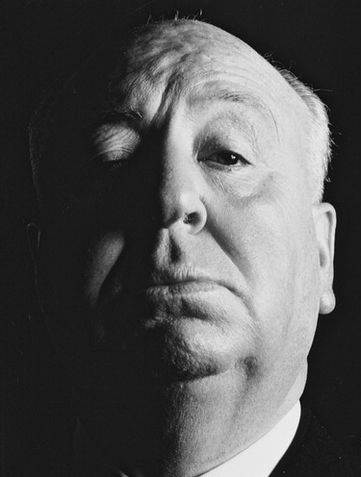
Alfred Hitchcock
.JPG)
Picture 1

Picture 2
Picture 3

Born: Alfred Joseph Hitchcock
13 August 1899
Leytonstone, London, England
Died: 29 April 1980 (aged 80)
Bel Air, Los Angeles, California, US
Other name(s): Hitch/ The Master of Suspense
Occupation: Film director
Years active: 1921–1976
Spouse(s): Alma Reville (1926–1980)
Info
Alfred Hitchcock’s Films
1)The Lodger (1926 - Silent)
2)The Ring (1927 - Silent)
3)Easy Virtue (1927 - Silent)
4)Champagne (1928 - Silent)
5)The Farmer's Wife (1928 Silent)
6)Manxman (1929)
7)Blackmail (1929)
8)Juno and the Paycock (1930)
9)Murder! (1930)
10)Skin Game (1931)
11)Rich and Strange (1932)
12)Number 17 (1932)
13)The Man Who Knew Too Much (1934)
14)The 39 Steps (1935)
15)Secret Agent (1936)
16)Sabotage (1936)
17)Young and Innocent (1937)
18)The Lady Vanishes (1938)
19)Jamaica Inn (1939)
20)Rebecca (1940)
21)Foreign Correspondent (1940)
22)Mr. & Mrs. Smith (1941)
23)Suspicion (1941)
24)Saboteur (1942)
25)Shadow of a Doubt (1943)
26)Bon Voyage & Aventure Malgache (1944)
27)Lifeboat (1944)
28)Spellbound (1945)
29)Notorious (1946)
30)The Paradine Case (1947)
31)Rope (1948)
32)Under Capricorn (1949)
33)Stage Fright (1950)
34)Strangers on a Train (1951)
35)I Confess (1953)
36)Dial M for Murder (1954)
37)Rear Window (1954)
38)To Catch a Thief (1955)
39)The Trouble with Harry (1955)
40)The Wrong Man (1956)
41)The Man Who Knew Too Much (1956)
42)Vertigo, Alfred Hitchcock (1958)
43)North by Northwest (1959)
44)Psycho, Alfred Hitchcock (1960)
45)The Birds (1963)
46)Marnie (1964)
47)Torn Curtain (1966)
48)Topaz (1969)
49)Frenzy (1972)
50)Family Plot (1976)
Friday, 22 January 2010
Narrative - Structure & Devices
Example - Clear establishment of 'cause & effect' plotting which established character motivations & helps tell an interesting story which proceeds logically & steadily.
Automatic use of 'continuity editing'
Enigmas
This refers to a puzzle, something mysterious, inexplicable, a riddle or difficult problem. in thrillers this is commonly something which the protagonist has to try to find out or solve before the narrative is resolved & the film finishes because it would ruin a film if you could guess the ending easily, we like to watch films to watch that last piece of the puzzle slide in place.
Red Herrings
The name given to a device which intends to divert the audience from the truth or an item of significance. This can also work with other devices such as enigmas to create suspense. For example in Saw II, two men are imprisoned in a room with an additional dead body, throughout the whole film we think we know who the murderer is. However the twist at the end reveals to us that what we thought was going was in fact something we didn't expect at all, as the dead person was actually the cause of the murders.
Cliff-hangers
Sometimes, although not always, used. Often features a main character in a precarious or difficult dilemma, or confronted with a shocking revelation. This can entice the audience to return to see how the characters resolve the dilemma. The outcome is often uncertain up to the very end or can end in suspense.
About Thrillers
Thriller is a broad genre of literature, film & television that includes numerous and often overlapping sub-genres. Thrillers are characterised by fast pacing, frequent action, and resourceful hero's who must thwart the plans of the villain. Devices such as suspense, red herrings & cliff-hangers are used extensively. A thriller is a villain driven plot, whereby he presents obstacles which the hero must overcome. The genre is flexible and can engage the audience through a dramatic rendering of psychological, social and political tensions. Thrillers often take place in exotic settings such as foreign cities. The heroes in most thrillers are frequently 'hard men' accustomed to danger e.g. policemen, or ordinary citizens drawn into danger. Thrillers often overlap with mystery stories, distinguished, in thrillers you know the killer or villain, but in murder mystery you don't know who did it. Thrillers are often influenced by film noir and the compromised hero is often killed in the process. Thrillers are on a grand scale e.g. world domination and terrorism.
Automatic use of 'continuity editing'
Enigmas
This refers to a puzzle, something mysterious, inexplicable, a riddle or difficult problem. in thrillers this is commonly something which the protagonist has to try to find out or solve before the narrative is resolved & the film finishes because it would ruin a film if you could guess the ending easily, we like to watch films to watch that last piece of the puzzle slide in place.
Red Herrings
The name given to a device which intends to divert the audience from the truth or an item of significance. This can also work with other devices such as enigmas to create suspense. For example in Saw II, two men are imprisoned in a room with an additional dead body, throughout the whole film we think we know who the murderer is. However the twist at the end reveals to us that what we thought was going was in fact something we didn't expect at all, as the dead person was actually the cause of the murders.
Cliff-hangers
Sometimes, although not always, used. Often features a main character in a precarious or difficult dilemma, or confronted with a shocking revelation. This can entice the audience to return to see how the characters resolve the dilemma. The outcome is often uncertain up to the very end or can end in suspense.
About Thrillers
Thriller is a broad genre of literature, film & television that includes numerous and often overlapping sub-genres. Thrillers are characterised by fast pacing, frequent action, and resourceful hero's who must thwart the plans of the villain. Devices such as suspense, red herrings & cliff-hangers are used extensively. A thriller is a villain driven plot, whereby he presents obstacles which the hero must overcome. The genre is flexible and can engage the audience through a dramatic rendering of psychological, social and political tensions. Thrillers often take place in exotic settings such as foreign cities. The heroes in most thrillers are frequently 'hard men' accustomed to danger e.g. policemen, or ordinary citizens drawn into danger. Thrillers often overlap with mystery stories, distinguished, in thrillers you know the killer or villain, but in murder mystery you don't know who did it. Thrillers are often influenced by film noir and the compromised hero is often killed in the process. Thrillers are on a grand scale e.g. world domination and terrorism.
Wednesday, 20 January 2010
Genres
Genre is a category or type. This includes; Action, Romance, Thriller, Comedy, Sci-Fi, Fantasy, Drama, Horror, Western, Adventure, Musical & Rom/Com.
Alfred Hitchcock - Rope (1948)
This thriller tells the story of two young wealthy men, Brandon & Philip, who strangle and murder a friend just to see if they could get away with it. After the murder, they invite close friends, including the murdered mans parents to their apartment for a dinner party whilst hiding the murdered body in a chest/box in their sitting room, right under everyones noses.
What do I think is going to happen?
I think either during or after the dinner party someone is keen on what’s inside the chest/box and once asked whats in there, the two men will be under pressure to come out with a believable explanation which will make them look slightly suspicious.
Hitchcock’s ‘Maguffin’
McGuffin also known as Maguffin, is a plot device that motivates the characters and advances the story, but has the little other relevance to the story. In other words it’s a significant nothing. An example of a Maguffin is in the film, Transformers. Everyoneone in the film is running around hoping find the location of something called the 'allspark' however it doesn't mean anything and yet it's such a significant item to everyone in the film.
The ‘Psychological’ Thriller: The Mind, Conflict & The Past
Suspense created by psychological thrillers often comes from two or more characters preying upon one another’s minds, either by playing deceptive games with others or by merely trying to
Alfred Hitchcock - Rope (1948)
This thriller tells the story of two young wealthy men, Brandon & Philip, who strangle and murder a friend just to see if they could get away with it. After the murder, they invite close friends, including the murdered mans parents to their apartment for a dinner party whilst hiding the murdered body in a chest/box in their sitting room, right under everyones noses.
What do I think is going to happen?
I think either during or after the dinner party someone is keen on what’s inside the chest/box and once asked whats in there, the two men will be under pressure to come out with a believable explanation which will make them look slightly suspicious.
Hitchcock’s ‘Maguffin’
McGuffin also known as Maguffin, is a plot device that motivates the characters and advances the story, but has the little other relevance to the story. In other words it’s a significant nothing. An example of a Maguffin is in the film, Transformers. Everyoneone in the film is running around hoping find the location of something called the 'allspark' however it doesn't mean anything and yet it's such a significant item to everyone in the film.
The ‘Psychological’ Thriller: The Mind, Conflict & The Past
Suspense created by psychological thrillers often comes from two or more characters preying upon one another’s minds, either by playing deceptive games with others or by merely trying to
Monday, 11 January 2010
Aspects of a Thriller
- Mystery
- Fast Tempo music
- Dark lighting
- Terror & suspense feature heavily
- ‘Time is an enemy’ race against time can feature
- Better equipped villain than hero
- Killer revealed at the end of the film
- Or killer revealed at the start & audience knows more than the protagonist
Examples of Thrillers
.JPG) ______North by Northest______Psycho__________Saw II
______North by Northest______Psycho__________Saw II
__________(1959)___________(1960)___________(2005)
Pic 1 Pic 2 Pic 3
Suspense & Shock
Suspense: An example of suspense would be a scene where the camera reveals that there is a bomb under the table to the audience, which leaves us apprehensive about what’s going to happen next.
Shock: An example of shock would be the same scene but instead of the camera revealing the bomb to us, it would just go off.
- Fast Tempo music
- Dark lighting
- Terror & suspense feature heavily
- ‘Time is an enemy’ race against time can feature
- Better equipped villain than hero
- Killer revealed at the end of the film
- Or killer revealed at the start & audience knows more than the protagonist
Examples of Thrillers
.JPG) ______North by Northest______Psycho__________Saw II
______North by Northest______Psycho__________Saw II__________(1959)___________(1960)___________(2005)
Pic 1 Pic 2 Pic 3


Suspense & Shock
Suspense: An example of suspense would be a scene where the camera reveals that there is a bomb under the table to the audience, which leaves us apprehensive about what’s going to happen next.
Shock: An example of shock would be the same scene but instead of the camera revealing the bomb to us, it would just go off.
Subscribe to:
Comments (Atom)